
by Rachael Haft
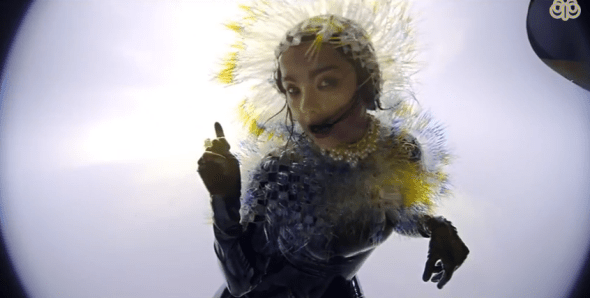
Vulnicura is a collaboration between the Icelandic composer Bjork and beat producer, Arca. It is an internal landscape and narrative, portraying the dissolution of her 13 year relationship with partner, Matthew Barney with whom she has a daughter. It explores the emotional process she went through before and after the breakup. It is the most confessional album of Bjork’s career which spans nearly three decades and 15 or so album releases. The emotional vulnerability of this musical diary is amplified by her use of semi-recitative vocals. The vocals in her track Stonemilker, in particular, are delivered with the utmost reverence for clarity and diction. This is an album in which the lyrics, story and meaning are placed at the highest priority and are at the heart of all the arrangements.
Bjork, is by far, the most important artist and influence of my life, not just because of her musical brilliance, but also because her music, art and activism is representative of what feminine strength means to me. Her lyricism is drenched in emotional intelligence, often instructive on processing difficult emotions, while at other times demonstrating a voracious love and understanding of science, nature and humanity. The lyrics in the track Lion Song are a wonderful example of this. “I refuse it’s a sign of maturity to be stuck in complexity. I demand all clarity.” In this line, Bjork vows to honor and trust her own emotional needs above any outside pressures to accept a situation that is making her unhappy. Her lyrics often reveal a person who is deeply attune to her own values, beliefs and needs, independent from the trappings of misogyny and societal expectations of women. Her exploration of female sexuality and ideas on feminism are rooted in a connection to self rather than a revolt against a mainstream idea of women or an absorption of female liberation ideologies. She offers insight into self actualization, as a woman, through self knowledge and self trust.

“Stonemilker,” the first track of the album and, as it happens, my favorite, is mostly in strophic form written for a string quartet with each verse repeated over the same two melodic themes, one played by the cello and the other by the violin, which sometimes performs in unison and other times harmonizes with Bjork’s vocals and ornaments them. The steady and somber pulse of the upright bass introduces the song and sets the mood. The vocals to this track are expressed in a powerful rhythmic delivery that emphasizes each syllable of the text, creating an environment in which “meaning” is the central pulse of the whole song.“A-juxt-a-pose-zi-shun-neeeng-fay-ates.—Find-our-mu-tu-al–co-or-di-na-ates.”
In “Lion Song,” Bjork’s vocals again are at the center of the arrangement with auto- tuned harmonies using her own voice as texture. The instruments are performed mostly in unison, acting as an extension or reverberation of her words and voice. They feel organically connected to her, rather than separate entities working in collaboration. The syllabical pulse of the cello imitates the intonation of speech. This use of an instrument as a surrogate voice reminds me of the talking drums of ghana. This arrangement may be symbolic of the different parts of a person coming together to find clarity as the lyrics deal with feeling internally divided by complex and varied emotions. “Once it was simple, one feeling at a time. It reached this peak and transformed. This abstract complex feeling, I just don’t know how to handle.” The music video for “Lion Song” further solidifies this imagery of the inner workings of a person, acting and experiencing things together and in response to one another. The footage of her performance includes views of her heart and the inside of her mouth and vocal cords.
The arrangements and composition of each piece in this album is very programmatic, with every element, intentionally selected for the purpose of helping illustrate the lyrical meaning of the text.
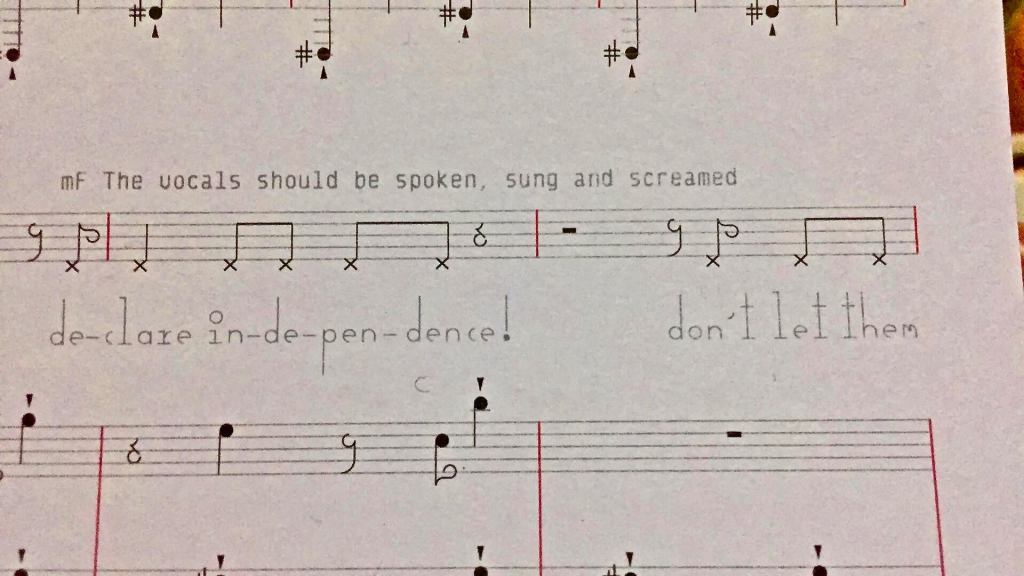
34 Scores for Piano, Organ, Harpsichord and Celeste – Björk
https://shop.bjork.com › Björk
It’s difficult for me to find anything I don’t like about this album. Even pieces that had less effect on me upon first hearing, such as “History of Touches” now move me after repeated listens. The unusual aural landscape and irregular meter make it more difficult to get inside of, but those qualities only contribute to the sensation that you are in a forbidden area and helps to illustrate how intimate the subject matter is.
There are few artists that can stand side by side with Bjork, but Roisin Murphy, who also draws her rich metaphorical lyrics from science and nature, Joanna Newsome whose repertoire is comprised of original folklore and Sevdaliza who uses science fiction and fantasy themes to explore her experience as an Iranian woman all have contributed to a more empowered dialogue around the female experience, for me. It’s also worth mentioning that the list of bands and artists that cite Bjork as an important influence is lengthy and broad. Bjork claims Chaka Khan, Kate Bush, Joni Mitchell, Kraftwerk and Brian Eno as important influences on her work.

I believe Vulnicura to be , not just an important contribution to the genre of breakup albums, sitting alongside Bob Dylan’s Blood on the Tracks with its rich offerings of therapeutic sonic worlds and bare chested language. It is also a deeply respectful monument to female feeling and experience, calling women to honor their pain, needs and desires. In a world that reverberates with shame and judgment around emotion and female experience, Vulnicura elevates emotional wisdom into the intellectual sphere it belongs.
Artist: Bjork
Composer: Bjork;Arca; The Hexan Cloak
Album name: Vulnicura
Date of recording: 2015
Genre: Electronic, Avant-garde, Ambient
 The Persistence of Hope
Leave a comment