Music and narrative have always been a powerful duo. They have bolstered the identities of countries, cultures, and communities across the globe, and can be found in the ragas of India, the calypso protest songs of Trinidad, the ballads of Ireland, African American Spirituals, Blues and Gospel and the folk songs of Thailand, Hungary, Russia and so on. It is a universally beloved art form. Each of these genres have an undeniable power and ability to provoke specific emotions in the listener. The music itself teaches the listener what to feel about the stories being told.
The invention of film and television offered new opportunities for musical story telling, and the world has been transfixed by these stories for over a century now. The importance of stories to the human spirit is evident, not just in how universal they are or how long we’ve been writing them, but also in the amount of time we spend listening to them, reading them and watching them.
Through film and television, we learn about the world around us and our place in it. We learn what our culture expects from us and how it feels about us. We learn that we are not alone in our feelings of longing, regret, guilt, disappointment, love, hope or fear. We witness all the possibilities of being human through cautionary tales, stories of triumph over obstacles and stories that challenge our perspective. We learn what we are capable of by seeing people that we identify with and relate to embody and act out a variety roles: hero, villain, soldier, athlete, artist, father, mother, lover, child. We practice imagining and building a different world through genres like science fiction and fantasy. Story is a powerful and effective tool for change.
The term, the Bambi Effect, was coined when the 1942 release of the Disney classic Bambi caused a drastic drop in hunting hobbyists and forever impacted environmental sentiments. Bambi created a heightened empathy for animals by showing the world through their perspective. One vital device they used to accomplish this perspective flip is through the film’s musical score. The film opens with a powerful ballad about the belief in love and belonging that many of us associate with youth and innocence. It’s called ‘Love is a Song That Never Ends” and was written by the late Delaney Bramlett. There is an intrinsic sadness to this song for adult listeners because we have already had to grapple with one of life’s first heartbreaks, the knowledge that our parents will die one day, that we will, that nothing is permanent.
Music is able to illustrate the emotional and internal landscapes of characters, making it easier to empathize and connect with them. Just as Bramlett’s “Love is a Song” tells the audience that Bambi experiences hope and the need for love, connection and safety just like us, the music for the scene in which a hunter kills Bambi’s mother argues that animals are devastated by the loss of their safety and loved ones as much as we are, that they experience fear, sadness and grief. It is a powerful call to imagine the world from another being’s experience. However you feel about Bambi’s effect on environmental views, its impossible not to see how powerful its influence was and how both useful and dangerous such a tool can be.
“It is difficult to identify a film, story, or animal character that has had a greater influence on our vision of wildlife.” -Ralph Lutts (environmental historian)
Many other films can be credited for creating measurable change in the world including Black Fish which forced Sea World to forever close their Orca exhibit. Top Gun caused a 500 percent increase in Navy enlistment. Linklater’s Bernie spurred the release of a convicted killer by creating empathy in the film’s depiction of his struggles. The film Philadelphia is credited for playing a large role in the destigmatization of AIDS. Films like Birth of a Nation, on the other hand, have had a more sinister impact. Its negative depiction of African Americans and positive depiction of clansmen as American heroes resulted in a massive wave of KKK enrollment and increased violence against black people.
Sadly, for much of film and television’s history, these tools that could so easily be used to foster compassion, empathy and understanding have frequently been used to foster contempt and fear. While homophobia and transphobia did not begin with cinema, there are certainly stereotypes, tropes and sentiments that have been fostered and popularized by cinema. You could argue that media popularized homophobia and transphobia. Part of the reason for this is that in 1934 ,The Hays Code was created, effectively banning representation of queerness from film and television. This later relaxed to allow some queer representation, but only if those queer characters were portrayed as villains. Artists who wished to depict their own queer experience were left with few options, but to try to voice their experience through the antagonist. On the other end of things, many heterosexual creators found the use of queer characters exciting and used them to add sensationalism and unease to horror films or absurdity to comedy. This can be seen in films like Psycho, Hannibal or Ace Ventura, Naked Gun, on the other end. Despite the Hays Code ending in 1968, these tropes have lived on leaving the world with a canon of work in which queer coded characters are portrayed either as salacious villains or the butt of a joke.
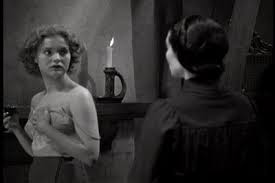
In the 1936 film, Dracula’s Daughter, one of the first coded lesbian representations appears in the form of…. you guessed it: a vampire. At first glance, this scene seems to start off with a beautiful depiction of a woman moved by feelings of attraction for another woman. The music is not unromantic, its kind of intoxicating, but the tone quickly shifts in this scene, as the music becomes more and more tense and trance like, probably eluding to a vampire’s ability to charm their victims. It ultimately devolves into a horror scene with the strings swelling louder and louder until you hear that classic Bernard Hermann (Psycho) staccato string effect with an innocent young woman screaming. Its crystal clear now that this is not a love story, but a predator and prey scenario.
Alfred Hitchcock’s Psycho itself is an example of a depiction of a queer coded character as a villainous monster. Hermann’s staccato strings have become a symbol of danger and fear that have been referenced by many other horror films. Crossdressing serial killers became a common trope after this film. I want to offer a trigger warning if you haven’t seen this film. It really is a ridiculous and distorted depiction of gender bending, but perhaps it will offer an “AHA!” moment for you as learning about this history of the queer coded villain has done for me. Transphobia and homophobia have start dates. Psycho could even explain( not justify) TERFS’ irrational fears of giving transgender women access to women’s bathrooms. These fears didn’t just pop up out of nowhere, and to me that offers hope that they also have expiration dates. There is nothing natural about fearing the creative expression of gender through clothes, and there is nothing natural or innate to humanity about fearing queerness. Audiences have been manipulated to feel these things through the brilliant use of staccato strings and a captivating story, not just once but repeatedly through passionate sermons and in many horror, crime thrillers.
I cannot save Psycho. The entire story and all of the imagery is problematic, but I did want to challenge myself to try to save a segment of the Dracula’s Daughter scene. I thought there were some elements of the scene that were positive for lesbian representation. Despite the score being quite beautiful, i was curious what a more sincere score might do for the scene, a score without all the suspense and danger cues. One thing you rarely find in queer representation is a dramatic, emotional James Horner string score where two queer characters are getting lost in each other’s eyes. Not sure if this type of score was lost when Horner passed away, but think Pride and Prejudice, Titanic or Braveheart. There is a good bit of intense eye contact in this scene and my goal is to try to make that feel romantic instead of creepy. Here is a Braveheart clip if you have no clue what I’m talking about. A good place to start is around 2:28. Can you hear how the music is conveying that this interaction is important, exciting, beautiful and loaded with emotions? This is what I’m going to attempt to do for my vampire scene.
So here is my go at creating big feels for Dracula’s Daughter. I would not score a vampire movie this way, but I do hope for more big dreamy moments for queer characters fleshed out with orchestral swells. This is, also, by the way, my first attempt at scoring anything, but its why I’m in school so I’m glad I’m getting a jump on it.
If you want to learn more about queer representation in media or are curious about how music and film interrelate, these are the resources I used for researching this project:
I rented this documentary from Amazon Prime and I highly recommend it! Its the history of queer representation and how its progressed through the years. Lily Tomlin is a narrator!
and these articles:
https://www.looper.com/149503/movies-that-actually-changed-the-world/
https://www.newyorker.com/magazine/2022/01/24/bambi-is-even-bleaker-than-you-thought
 The Persistence of Hope
Leave a comment